

The Gambia MPC likely to leave MPR unchanged at 17% in 2025
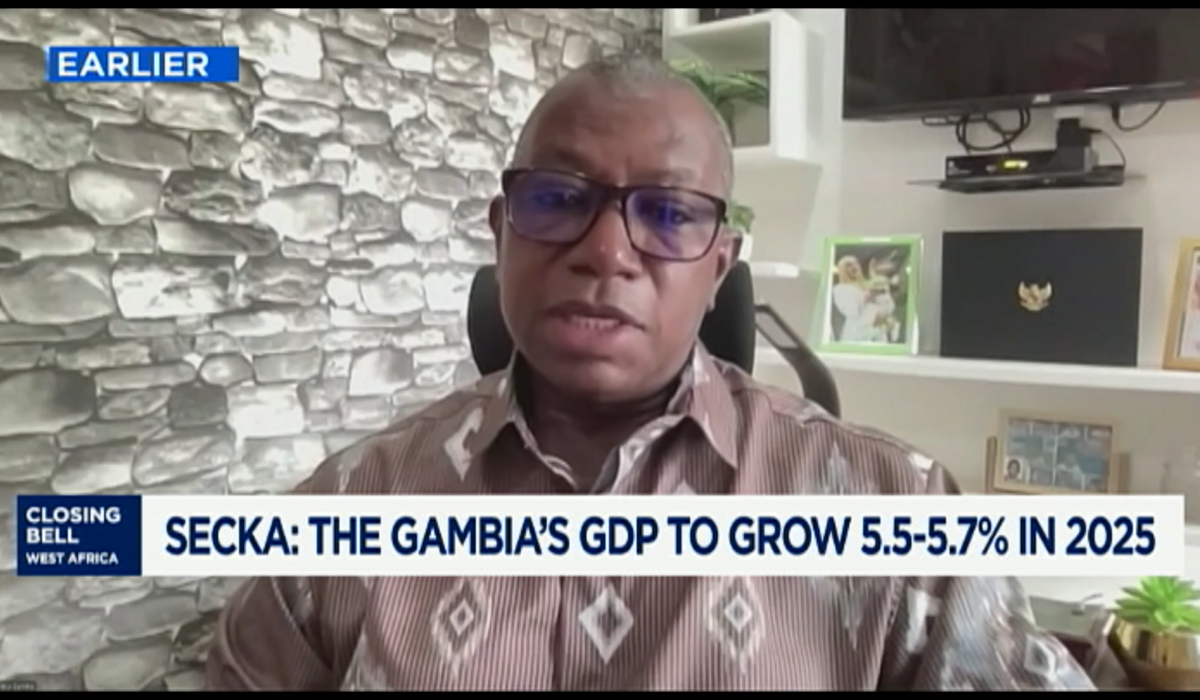
Alieu Secka, a Transformation Specialist at ABSS Consulting, provided a comprehensive analysis on CNBC concerning the monetary policy outlook for The Gambia amid fluctuating oil prices and ongoing inflationary pressures. His insights suggest a cautious stance by the Bank of The Gambia, which is likely to maintain the Monetary Policy Rate (MPR) at the current level of 17 percent through the end of 2025.
Secka highlighted the impact of recent geopolitical events, such as the short-lived conflict between Iran and Israel, on global oil prices, which he says created further skepticism and concern. Additionally, with exploratory activities in various West African countries including Gambia, there is potential for a boost in local oil supply which might alleviate some pricing pressures. Despite these dynamics, the Central Bank is expected to hold steady to control headline inflation currently hovering between 8 and 9 percent.
Economic growth in The Gambia, as forecasted by Secka, could see the Gross Domestic Product (GDP) expanding by 5.5 to 5.7 percent this year. Nevertheless, there exists a need for watchfulness ahead of the 2026 general elections. Secka points out the critical role of the construction sector as a growth driver, illustrating its significant expansion over two decades by 17 percent. Major infrastructure projects like The Port of Banjul, Baratun-Harden Highway, and new exploration initiatives for deep-water oil contribute to this sector’s robust contribution to national economic advancement.
“We have seen nearly 300 and possibly 700 kilometers of new road infrastructure established by the government, alongside innovative contracts such as the management of the new port by a Turkish company, signifying substantial progress in Gambia’s capacity for import and export services. However, the political climate remains tenuous,” Secka elaborated.
Addressing monetary policy projections, Secka conveyed that while some forecasts hypothesize a 200 basis point cut in rates for 2025, the Central Bank of The Gambia is predicted to be conservative with rate adjustments for the current year, unless there are significant shifts in revenue dynamics and inflation trends. He emphasized that the uptick in basic commodity prices, including a recent 20 percent increase in bread prices, fortifies the Central Bank’s resolve to maintain current rates to manage inflation effectively.
The socio-economic landscape also heavily relies on remittances and tourism, marked by increased tourist arrivals following the COVID-19 downturn. Pre-COVID figures hovered around 600,000 annually but receded drastically to 100,000 during the pandemic’s peak. The resurgence is noteworthy, with arrivals now ranging between 200,000 and 300,000 per annum, proving pivotal for foreign exchange earnings.
Diaspora remittances constitute an impressive 30 to 40 percent of national revenue, but Secka warned that potential political unrest in diaspora-hosting foreigners, such as the United States, adds layers of unpredictability. The anticipated election year of 2026 further complicates economic forecasts. Central to future political debates is the possible candidacy of the incumbent President Ali Mubarak in his third presidential race—factors that add to the existing macroeconomic uncertainty.
Drawing strategic lines between potential economic growth drivers and existing geopolitical risks, Secka concludes that The Gambia must navigate through a complex landscape, balancing cautious optimism with the ever-present reality of its economic dependencies.